

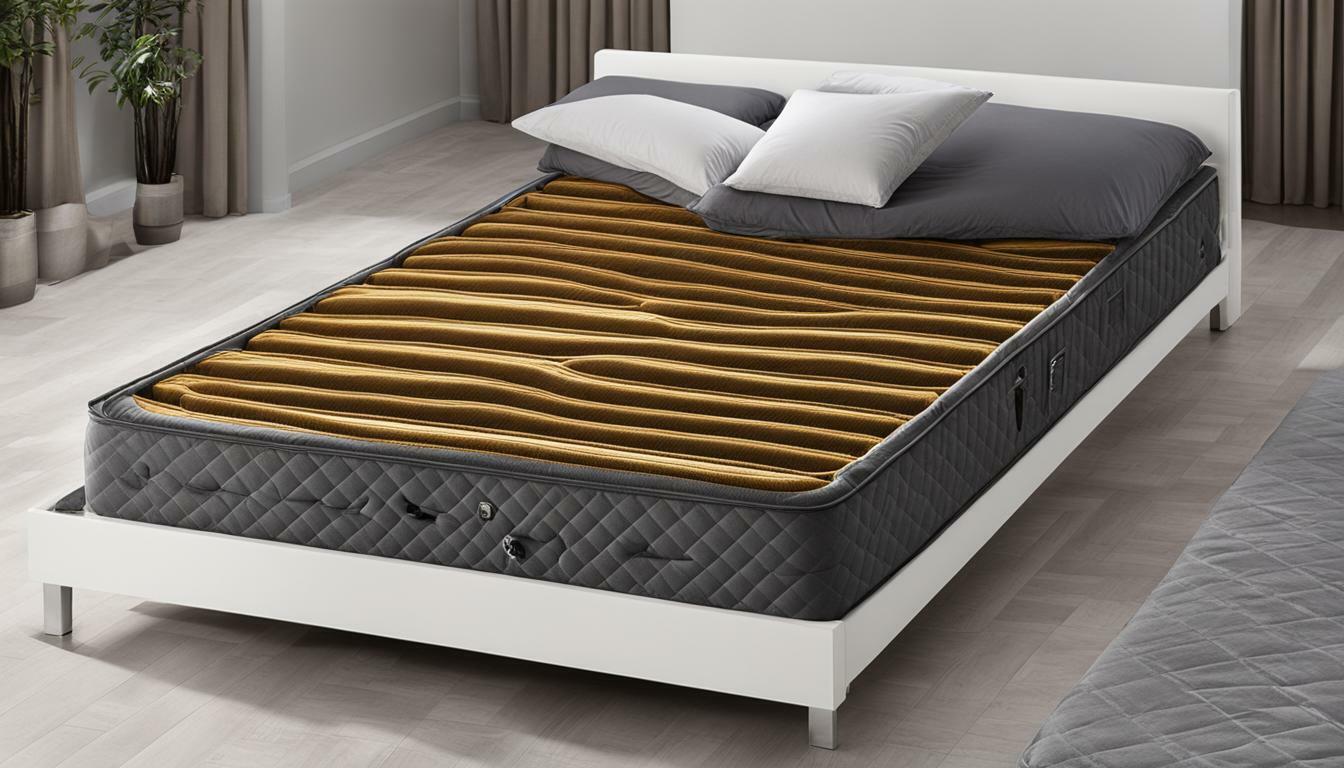
Innerspring mattresses have been a popular choice for sleepers for centuries due to their unique construction and benefits. These mattresses contain coiled metal springs and layers of cushioning, offering targeted support and a firmer feel compared to memory foam mattresses. Invented in the 19th century, innerspring mattresses have evolved over time to provide improved comfort and sleep quality.
One of the key advantages of innerspring mattresses is their cooling properties. The open structure of the coil system allows for better airflow, keeping sleepers cool throughout the night. Additionally, the motion isolation capabilities of innerspring mattresses make them an ideal choice for couples, as movements on one side of the bed are less likely to disturb the other.
When it comes to the number of coils in a mattress, a queen-size mattress typically has at least 400 coils. These coils provide support and promote proper spinal alignment while sleeping. There are three main types of coils used in innerspring mattresses:
- Bonnell coils: The most common type, Bonnell coils have an hourglass shape and offer a sturdy and durable sleep surface.
- Offset coils: Offset coils have a square top and bottom, and they can be hinged together for better conformity and reduced motion transfer.
- Pocket springs: Individually wrapped coils placed in fabric pockets offer more individualized pressure adjustment, promoting personalized comfort.
Although innerspring mattresses were traditionally sold in brick-and-mortar stores, online options are becoming more readily available. However, due to their coiled construction, many sleepers prefer to try them out in physical stores before making a purchase.
Key Takeaways:
- Innerspring mattresses have a unique construction with coiled metal springs and cushioning layers.
- They provide targeted support and are firmer than memory foam mattresses.
- Innerspring mattresses offer cooling properties and motion isolation.
- The number of coils in a mattress can vary, with a queen-size mattress typically having at least 400 coils.
- The three main types of coils used in innerspring mattresses are Bonnell coils, offset coils, and pocket springs.
The Engineering Behind Innerspring Mattresses
Innerspring mattresses are built using coiled metal springs as the foundation, providing support and durability. These mattresses have been a popular choice for decades, offering a comfortable and traditional sleep experience. The engineering behind innerspring mattresses involves intricate design and careful construction to ensure a restful night’s sleep.
Coiled metal springs are the backbone of innerspring mattresses. These springs, typically made of high-quality steel, are strategically placed throughout the mattress to provide support and promote proper spinal alignment. The number of coils can vary depending on the size and brand of the mattress, but a queen-size mattress typically has at least 400 coils.
The springs in innerspring mattresses can be of different types: Bonnell coils, offset coils, or pocket springs. Bonnell coils are the most common and have an hourglass shape. They are interconnected, providing stability and durability to the mattress. Offset coils, on the other hand, have a square top and bottom and can be hinged together for better conformity. This type of coil offers enhanced support and minimizes motion transfer. Pocket springs, also known as individually wrapped coils, are placed in fabric pockets. Each coil moves independently, allowing for more personalized pressure adjustment and improved contouring to the body’s shape.
To enhance comfort, innerspring mattresses include layers of cushioning material. These layers can be made of foam, fiber, or a combination of both. The cushioning layers provide additional support and help to distribute body weight evenly, reducing pressure points and promoting a more comfortable sleep surface.
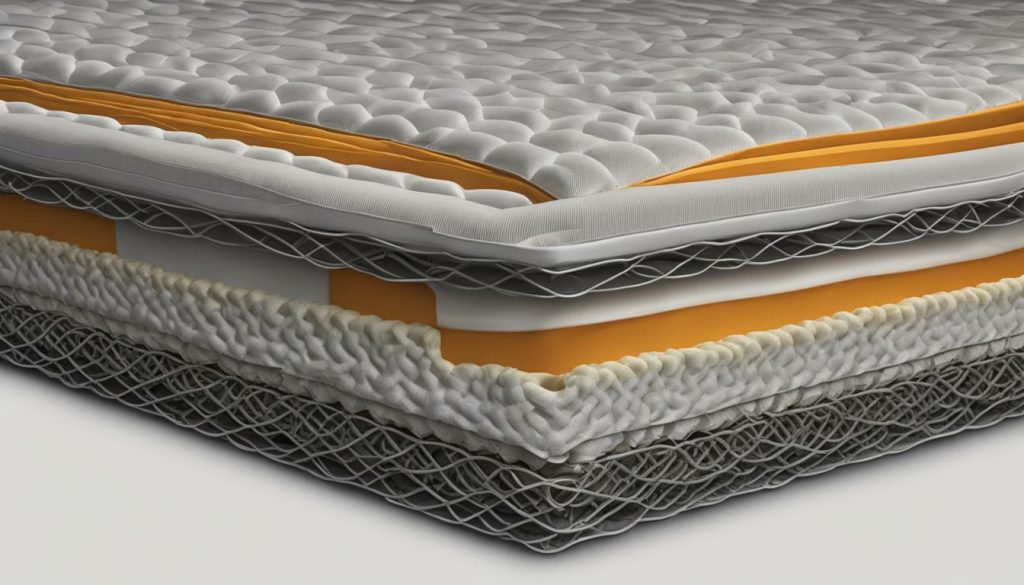
- Targeted support: Innerspring mattresses offer targeted support, with the coiled springs contouring to the body’s curves and providing support where it’s needed most.
- Cooling properties: The coiled construction of innerspring mattresses allows for increased airflow, helping to dissipate heat and keep sleepers cool throughout the night.
- Motion isolation: Innerspring mattresses excel at isolating motion, making them a great choice for couples or restless sleepers who don’t want to disturb their partners.
- Durability: Thanks to the sturdy metal springs and high-quality materials used in their construction, innerspring mattresses are known for their durability and long lifespan.
While innerspring mattresses offer many benefits, it’s important to note that they may not be suitable for everyone. Some people find them too firm or lacking in contouring support. In such cases, hybrid mattresses that combine foam and coils may be a better option. These mattresses offer the best of both worlds, combining the support of innerspring with the comfort and contouring properties of foam.
In conclusion, the engineering behind innerspring mattresses involves coiled metal springs and layers of cushioning to provide support, durability, and a restful sleep experience. Whether you choose a traditional innerspring mattress or opt for a hybrid, selecting the right mattress is essential for a good night’s sleep.
| Types of Coils | Description |
|---|---|
| Bonnell Coils | The most common type of coil, these have an hourglass shape and offer stability and durability. |
| Offset Coils | Offset coils have a square top and bottom and can be hinged together. They provide enhanced support and minimize motion transfer. |
| Pocket Springs | Individually wrapped coils placed in fabric pockets. Each coil moves independently, allowing for personalized pressure adjustment and contouring. |
Different Types of Coils in Innerspring Mattresses
Innerspring mattresses feature different types of coils, each with its own unique design and benefits. These coils play a crucial role in determining the comfort and support provided by the mattress. Let’s take a closer look at the three main types of coils commonly found in innerspring mattresses: Bonnell coils, offset coils, and pocket springs.
Bonnell Coils
Bonnell coils are the most widely used type of coil in innerspring mattresses. They have an hourglass shape and are interconnected by wires, creating a sturdy and durable support system. Bonnell coils provide a firm and responsive feel, making them suitable for individuals who prefer a traditional mattress feel. These coils offer excellent support and help in maintaining proper spinal alignment during sleep.
Offset Coils
Offset coils are designed to conform to the body’s contours more closely than Bonnell coils. These coils have a square top and bottom, which allows them to hinge together for better conformity. By providing targeted support, offset coils help alleviate pressure points and reduce the risk of tossing and turning throughout the night. This makes them a great choice for individuals who experience back or joint pain.
Pocket Springs
Pocket springs, also known as encased coils, are individually wrapped coils placed in fabric pockets. This design allows each spring to move independently, providing a high level of individualized pressure adjustment and minimizing motion transfer between partners. Pocket springs offer excellent support and contouring to the body’s shape, resulting in enhanced comfort and a more personalized sleep experience.
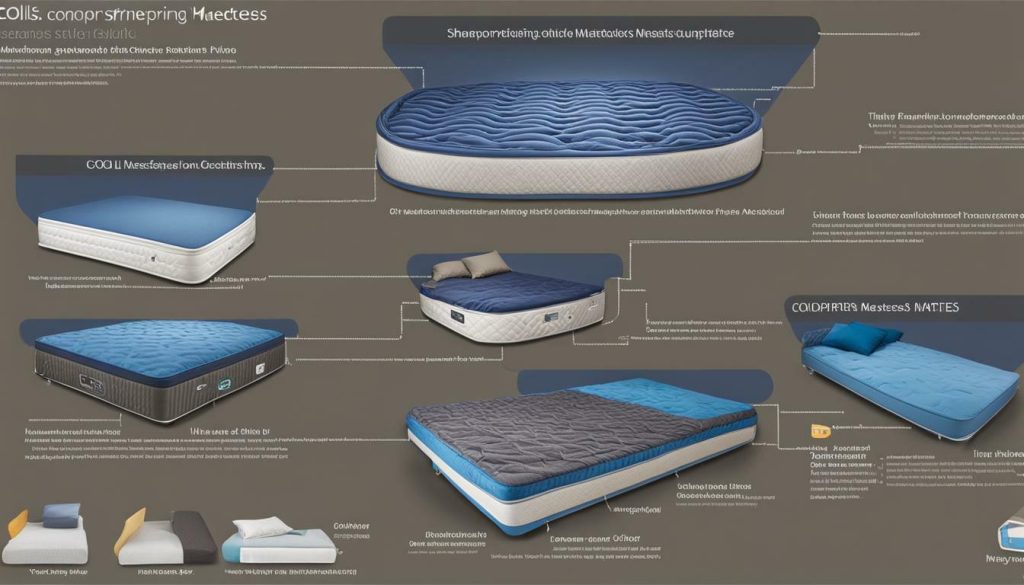
| Type of Coil | Design | Benefits |
|---|---|---|
| Bonnell Coils | Hourglass shape, interconnected | Sturdy support, firm feel, proper spinal alignment |
| Offset Coils | Square top and bottom, hinged together | Conforms to body contours, pressure relief, reduced motion transfer |
| Pocket Springs | Individually wrapped, fabric pockets | Individualized pressure adjustment, minimal motion transfer, enhanced comfort |
When choosing an innerspring mattress, it’s essential to consider the type of coils used and how they align with your individual sleep preferences. The table above provides a quick overview of the design and benefits of each coil type, helping you make an informed decision. Remember, everyone’s comfort preferences are different, so it’s always a good idea to test out different mattress types before making a final decision.
In summary, innerspring mattresses offer a variety of options when it comes to coil types. Whether you prefer the traditional feel of Bonnell coils, the conforming support of offset coils, or the personalized comfort of pocket springs, there is a coil type to suit your needs. Ultimately, the type of coil you choose will contribute to the overall comfort, support, and durability of your innerspring mattress.
Pros and Cons of Innerspring Mattresses
Innerspring mattresses offer targeted support and motion isolation, but they also have some limitations to consider. Let’s explore the pros and cons of these popular mattresses.
Pros of Innerspring Mattresses
- Targeted Support: Innerspring mattresses are known for their excellent support. The coiled metal springs provide the right amount of pushback to align your spine and reduce pressure points. This can help alleviate back and joint pain.
- Cooling Properties: The open structure of innerspring mattresses allows for good airflow, keeping you cool and comfortable throughout the night. This is especially beneficial for hot sleepers or those living in warmer climates.
- Durability: Innerspring mattresses are typically more durable compared to other types of mattresses. The sturdy construction of the coils ensures that the mattress maintains its shape and support for a longer period of time.
Cons of Innerspring Mattresses
- Motion Transfer: While innerspring mattresses offer motion isolation to some extent, they may not be as effective as memory foam or latex mattresses. If you share your bed with a restless partner, their movements can disturb your sleep.
- Minimal Contouring: Unlike foam mattresses, innerspring mattresses provide minimal contouring to your body. This can be a drawback for individuals seeking pressure relief and a more cradling sensation while sleeping.
- Noise: The presence of metal coils in innerspring mattresses can sometimes result in noise, especially when the mattress is old or not well-constructed. This can be an issue for light sleepers or those easily disturbed by sounds.

It’s important to weigh the pros and cons when considering an innerspring mattress. While they offer targeted support and are known for their cooling properties, they may not be the best option for everyone. If you prioritize motion isolation, contouring, or a quieter sleeping environment, you may want to explore other mattress types, such as hybrid mattresses that combine foam and coils, to find the perfect fit for your sleep needs.
Note: The image above represents an innerspring mattress and is for illustrative purposes only.
Summary:
- Innerspring mattresses offer targeted support and motion isolation.
- Pros include targeted support, cooling properties, and durability.
- Cons include motion transfer, minimal contouring, and potential noise.
- Consider hybrid mattresses for improved motion isolation and contouring.
| Pros of Innerspring Mattresses | Cons of Innerspring Mattresses |
|---|---|
| Targeted support | Motion transfer |
| Cooling properties | Minimal contouring |
| Durability | Noise |
Choosing the Right Mattress for You
While innerspring mattresses have their merits, hybrid mattresses that combine foam and coils may be a more suitable choice for most individuals. Hybrid mattresses offer the best of both worlds by combining the support of innerspring mattresses with the pressure-relieving comfort of foam.
When it comes to selecting the right mattress, it’s important to consider your individual needs and preferences. If you prefer a firmer feel and targeted support, an innerspring mattress may be a good option. Innerspring mattresses are known for their ability to provide a bouncy, responsive surface and are particularly beneficial for those who sleep on their stomach or back.
However, if you value pressure relief and motion isolation, a hybrid mattress might be a better fit. The foam layers in hybrid mattresses conform to your body shape, reducing pressure points and promoting proper spinal alignment. Additionally, the combination of foam and coils in hybrid mattresses helps to minimize motion transfer, making them an excellent choice for couples or restless sleepers.
Ultimately, the decision between an innerspring mattress and a hybrid mattress depends on your personal preference for support, comfort, and motion isolation. To ensure you make the right choice, it’s advisable to try out different mattress types in-store to get a feel for their individual characteristics. By considering your unique sleeping preferences, you can find the perfect mattress that provides the comfort and support you need for a restful night’s sleep.
FAQ
Q: What is an innerspring mattress?
A: An innerspring mattress is a type of bed that contains coiled metal springs and layers of cushioning. It offers targeted support and is known for its cooling and motion isolation properties.
Q: How many coils are typically in a queen-size innerspring mattress?
A: A queen-size innerspring mattress typically has at least 400 coils.
Q: What are the different types of coils used in innerspring mattresses?
A: The three main types of coils used in innerspring mattresses are Bonnell coils, offset coils, and pocket springs.
Q: What are the pros and cons of innerspring mattresses?
A: Innerspring mattresses offer targeted support and motion isolation, but they may not be as durable or conforming as other types of mattresses.
Q: Should I choose an innerspring mattress or a hybrid mattress?
A: It depends on your preferences. Hybrid mattresses, which combine foam and coils, may be a better option for most people as they offer the benefits of both materials.

