 Home
Home
How to Let Go of Sentimental Clutter Without the…
I used to think that keeping every single ticket stub, faded photograph, and chipped ceramic mug from my childhood was a way of honoring my past, but honestly? It was just turning my apartment into a museum of things I don’t actually use. I spent an entire weekend staring at a box of old college notebooks, paralyzed by the idea that decluttering sentimental items meant I was somehow deleting the memories themselves. It’s a total lie that you need to be a minimalist monk or spend thousands on professional organizers to reclaim your space; you just need a better system for deciding what actually deserves a spot on your shelf.
I’m not here to give you some vague, “follow your heart” advice that leaves you feeling guilty and overwhelmed. Instead, I’m going to give you the exact, pragmatic framework I use to sort through the emotional heavy lifting without the mental breakdown. We’re going to talk about practical ways to digitize, donate, and decide, so you can stop managing a hoard and start actually living in your home again.
Table of Contents
Overcoming Guilt When Decluttering Your Past
I know that heavy feeling in your chest when you pick up a dusty box of old letters or a trinket from a grandmother you miss dearly. It’s not just stuff; it’s a physical manifestation of a moment in time. The guilt usually stems from a false idea that if we get rid of the item, we’re somehow erasing the person or the memory attached to it. But here’s the truth: your memories live in your head and your heart, not in a pile of clutter taking up space in your hallway.
If you’re struggling with an emotional attachment to objects, try shifting your perspective from “throwing away” to “curating.” You aren’t deleting your past; you are simply choosing which pieces deserve a spot in your current life. If you find yourself stuck on a mountain of paperwork or old mementos, I highly recommend looking into how to digitize old photos and documents. This allows you to keep the essence of the memory without the physical footprint. Once you realize that keeping the story matters more than keeping the clutter, the guilt starts to lose its grip.
Sorting Through Family Heirlooms Without the Stress
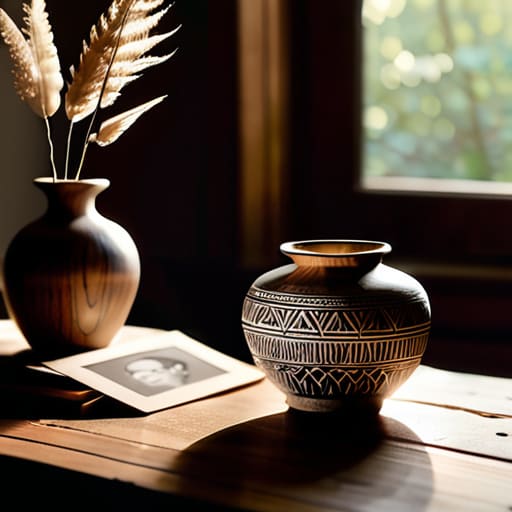
When it comes to sorting through family heirlooms, the biggest mistake is trying to tackle the whole attic in one afternoon. That’s a recipe for burnout and a lot of unnecessary tears. Instead, I like to use a “triage” method. I grab three bins: Keep, Pass On, and Digitization. If you’re looking at a heavy, ornate vase that your grandmother loved but doesn’t fit your life, ask yourself if you’re keeping it for the object itself or the memory. If it’s the memory, you don’t need the dust-collector; you just need a way to honor it.
This is where minimalism and memory keeping actually shake hands. For the stuff that’s too bulky or fragile to store, I’ve found that learning how to digitize old photos or even taking high-quality shots of unique trinkets is a total game-changer. You get to preserve the essence of the item without the physical clutter taking up precious real estate in your apartment. By curating meaningful collections rather than hoarding every scrap of history, you’re choosing to keep the stories that actually matter.
Five ways to clear the clutter without losing the memories

- The “Digital Snapshot” trick: If you’re holding onto something just because it looks cool or represents a moment, take a high-quality photo of it. You keep the memory and the visual, but you get your shelf space back.
- Set a “decision timer”: Don’t let yourself linger over a single box for an hour. Give yourself three minutes per item. If you can’t decide, put it in a “maybe” bin and walk away; if you don’t miss it in a week, it’s gotta go.
- Distinguish between “sentimental” and “functional”: Just because your grandmother made a beautiful ceramic bowl doesn’t mean it has to sit in a box in the attic. If it’s sturdy, use it. If it’s broken, it’s an object, not a legacy.
- The “One-In, One-Out” rule for heirlooms: If you decide to keep a piece of family jewelry or a vintage clock, pick one specific spot for it. You can’t keep every piece of history; choose the ones that actually speak to you.
- Focus on the feeling, not the stuff: Ask yourself, “Does keeping this item actually make my life better, or am I just keeping it because I feel obligated?” If the answer is obligation, you’re just managing inventory, not preserving memories.
The Bottom Line: Moving Forward Without the Weight
Remember that you aren’t throwing away the memory, just the physical clutter; a photo of an object is often more useful than the object itself.
Set a hard time limit for each session to prevent emotional burnout, because if you spend four hours crying over a chipped mug, you aren’t decluttering—you’re stalling.
Focus on what adds value to your current life rather than what feels like an obligation to your past, making room for the things you actually use and love.
The true cost of keeping everything
“We tend to treat every old trinket like a sacred relic, but the truth is, your memories don’t live in a dusty box in the corner of your spare room; they live in you. Don’t let the weight of things you no longer use crowd out the space you need to actually live your life today.”
Julian Reese Miller
Making Room for What Matters
Look, we’ve covered a lot of ground here. We talked about tackling that heavy layer of guilt that comes with letting go, and we looked at how to handle family heirlooms without feeling like you’re betraying your history. The goal wasn’t to turn you into a minimalist robot, but to help you realize that your memories don’t live in a dusty box in the corner of your spare room. By categorizing what to keep, what to digitize, and what to pass on, you’re finally taking control of your space instead of letting your past dictate your present. It’s about being intentional with your inventory so that the things you do keep actually have room to breathe.
At the end of the day, this isn’t just about cleaning out a closet or clearing off a shelf; it’s about reclaiming your mental bandwidth. Every piece of clutter you decide to let go of is one less thing weighing on your mind when you walk through your front door. You deserve a home that feels like a sanctuary, not a museum of things you’re too afraid to touch. So, grab that multi-tool, pick one small drawer, and just start moving. You’ll find that once the physical weight is gone, you actually have the energy to go out and start making new memories that don’t require a storage unit.
Frequently Asked Questions
What do I do with things that have zero practical value but I just can't bear to throw away?
Look, I get it. I have a drawer full of old synth parts that serve no purpose, but I can’t bring myself to toss them. Here’s my rule: if it has no utility and no way to be passed down, stop treating it like a treasure and start treating it like a memory. Take a high-quality photo of it. That way, you keep the sentiment without the physical clutter taking up space in your life.
How do I handle it when my family members get upset that I'm getting rid of certain items?
Look, this is the part no one prepares you for. When you start thinning out the clutter, it can feel like you’re erasing part of the family history. My advice? Don’t make it a confrontation; make it a conversation. Instead of saying, “I’m throwing this out,” try, “I want to honor this, but I don’t have the space for the physical object.” Offer to take a high-quality photo or digitize it. It preserves the memory without the storage tax.
Is there a way to keep the memory of an object without actually keeping the physical clutter in my apartment?
Honestly, this is the biggest hurdle for most of us. I used to think if I let go of my grandfather’s old toolkit, I was losing his memory. I was wrong. The best way to do this is to digitize. Take a high-quality photo of the item or even a short video of you holding it. Once you have that digital footprint, the physical object becomes optional. It’s about keeping the story, not the dust.